
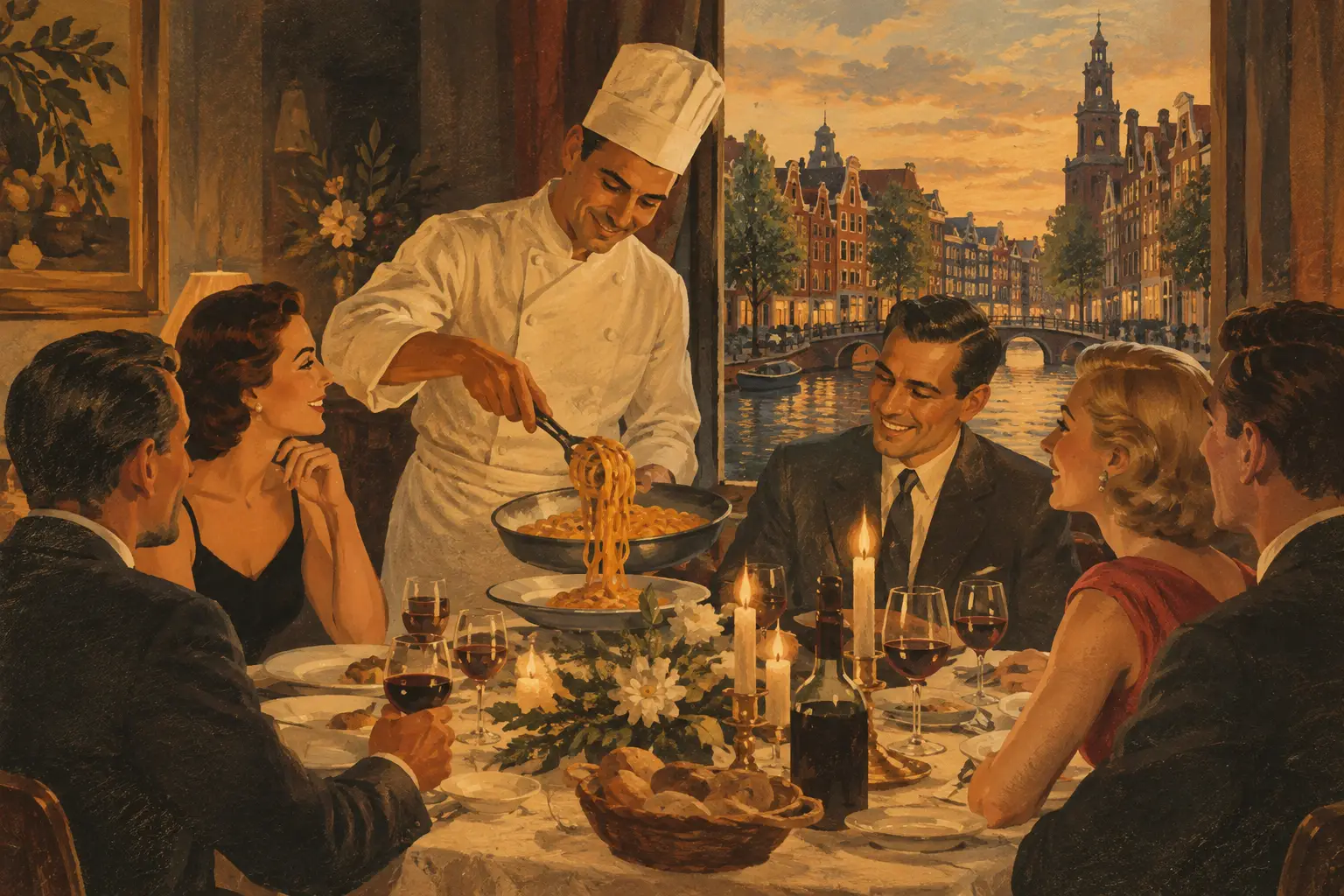
A private dinner should feel more personal than a reservation with a larger table. It is the moment when the room settles around your guests, the wine is poured, and every course gives people another reason to stay at the table. For Italian private dining Amsterdam guests can enjoy with real warmth, the best occasions balance polished service with the relaxed generosity that makes Italian meals memorable.
Whether you are planning a company dinner near the heart of the city, celebrating a birthday with family, or gathering friends before a special evening out, the details matter. The setting needs to be convenient, the food needs to please different tastes, and the atmosphere should feel elevated without becoming stiff.
Why Italian cuisine works so well for private dining
Italian food is made for sharing time together. A thoughtfully chosen antipasto brings the table into the conversation before the first main course arrives. A silky risotto, fresh pasta, or a pizza from a wood-fired oven offers familiar pleasure, while a carefully prepared fish or meat dish can give a celebratory dinner its sense of occasion.
That range is particularly valuable for groups. Not every guest wants the same experience from a meal, especially when a party includes colleagues, international visitors, families, or different dietary preferences. An Italian menu can move naturally from light vegetable-led starters to rich truffle ravioli, seafood, premium meats, and comforting desserts. It feels generous rather than overly formal.
The strongest private dining experiences also leave room for seasonality. Ingredients at their best need little embellishment: ripe tomatoes, fragrant herbs, exceptional olive oil, delicate seafood, and pasta prepared with care. Contemporary presentation can refine the meal, but regional Italian flavors should remain recognizable on the plate.
Choosing the right format for your group
Private dining does not have to mean the same thing for every occasion. A small group marking an anniversary may want an intimate dinner with a paced, à la carte feel. A larger corporate gathering usually benefits from a set menu, allowing the kitchen to serve each course with consistency and keeping the evening moving at a comfortable pace.
For a business dinner, consider what the group needs to accomplish. If conversation is the priority, choose dishes that are easy to enjoy without interrupting the table. A selection of antipasti followed by a choice of pasta, fish, or meat can create variety while keeping service elegant and efficient. A long, elaborate menu can be wonderful for a celebration, but it may not suit a meeting with a schedule to keep.
Family celebrations call for a different rhythm. Here, abundance matters. Guests often appreciate a menu that includes a few familiar favorites alongside one or two more distinctive dishes. Creamy risotto, handmade pasta, and wood-fired pizza can sit comfortably beside refined seafood or a memorable meat course. The result is a meal that gives every generation something to look forward to.
What makes a private dinner feel considered
The most successful group dinners are organized well before guests arrive. Start with the practical essentials: party size, date, timing, budget, and any dietary requirements. Then think about the character of the evening. Is it a formal client dinner, a relaxed reunion, a birthday toast, or an end-of-year team celebration? The answer should guide the menu and service style.
A set menu is often the most dependable choice for groups because it creates a shared culinary journey. It also gives the kitchen time to focus on precision, temperature, and presentation. That does not mean every plate needs to be identical. A well-planned menu can accommodate vegetarian, pescatarian, and other requirements when they are communicated in advance.
Wine deserves the same consideration as food. Italian whites can bring freshness to delicate antipasti and fish, while structured reds complement richer pasta sauces and meat. If the event is professional, a measured wine selection may be more suitable than a large pairing. For a celebration, an aperitif on arrival and a final toast can add a sense of ceremony without making the evening feel overly programmed.
The value of a central Amsterdam location
Location can make a surprising difference to the mood of a group dinner. A restaurant in central Amsterdam makes arrival simple for local guests, visitors staying nearby, and colleagues traveling across the city. It also gives the evening flexibility: guests can meet for an aperitif before dinner, linger over dessert, or continue their plans nearby afterward.
Savini Ristorante Italiano, located on Spuistraat, brings this convenience together with a fine Italian dining experience designed around authentic cuisine and welcoming hospitality. For groups, that combination matters. The room should feel special enough for a milestone but comfortable enough that guests can settle in and enjoy themselves.
A menu with both familiarity and surprise
Private dining menus are strongest when they offer a clear point of view. A menu filled with too many options can make planning difficult and slow down the experience. One that is too narrow can leave guests feeling overlooked. The sweet spot is a focused selection with enough breadth to reflect the full appeal of Italian cooking.
Begin with antipasti that invite people to share and talk. From there, pasta can provide the heart of the menu: perhaps a seasonal ravioli, a rich risotto, or a classic sauce interpreted with a lighter, contemporary touch. A truffle ravioli, for example, brings aroma and indulgence to a celebratory meal, while a pesto-based dish can offer a bright, herbaceous counterpoint.
For the main course, it depends on the event. Premium meat and fish selections lend themselves to an occasion where the dinner itself is the centerpiece. For a more relaxed gathering, the warmth of wood-fired pizzas and pasta may be exactly right. There is no single formula, only the need to match the food to the guests and the purpose of the table.
Dessert should not be an afterthought. It is the final shared pause of the night, and it can shift the room from formal dining into easy conversation. A classic Italian finish, good coffee, and perhaps a digestif allow the evening to close at its own pace.
Planning with hospitality in mind
Private dining is not only about the menu. It is about how guests are looked after from the first welcome through the last goodbye. Clear communication before the event gives the host confidence. On the night, attentive but unobtrusive service gives guests space to connect.
For organizers, this is especially valuable. The person booking the dinner should not have to manage every detail at the table. When the restaurant understands the occasion, confirms the arrangements, and serves the group with calm professionalism, the host can become a guest too.
It also helps to be realistic about timing. A birthday dinner may be happiest with a leisurely pace and room for speeches or a cake moment. A corporate gathering may need a defined start and finish. Share those expectations early, along with any preferences for seating, drinks, or the flow of courses. Small decisions made in advance create a more effortless evening later.
Italian private dining in Amsterdam, made personal
The appeal of Italian private dining in Amsterdam is not simply pasta, pizza, or a beautiful bottle at the table. It is the feeling of being gathered around food prepared with care, where a business relationship becomes warmer, a family celebration gains texture, or friends turn one dinner into a lasting memory.
Choose a restaurant that respects both sides of the occasion: culinary excellence in the kitchen and genuine Italian togetherness in the room. When seasonal ingredients, a considered group menu, and warm hospitality come together, your guests will remember far more than where they sat. They will remember how the evening felt.