
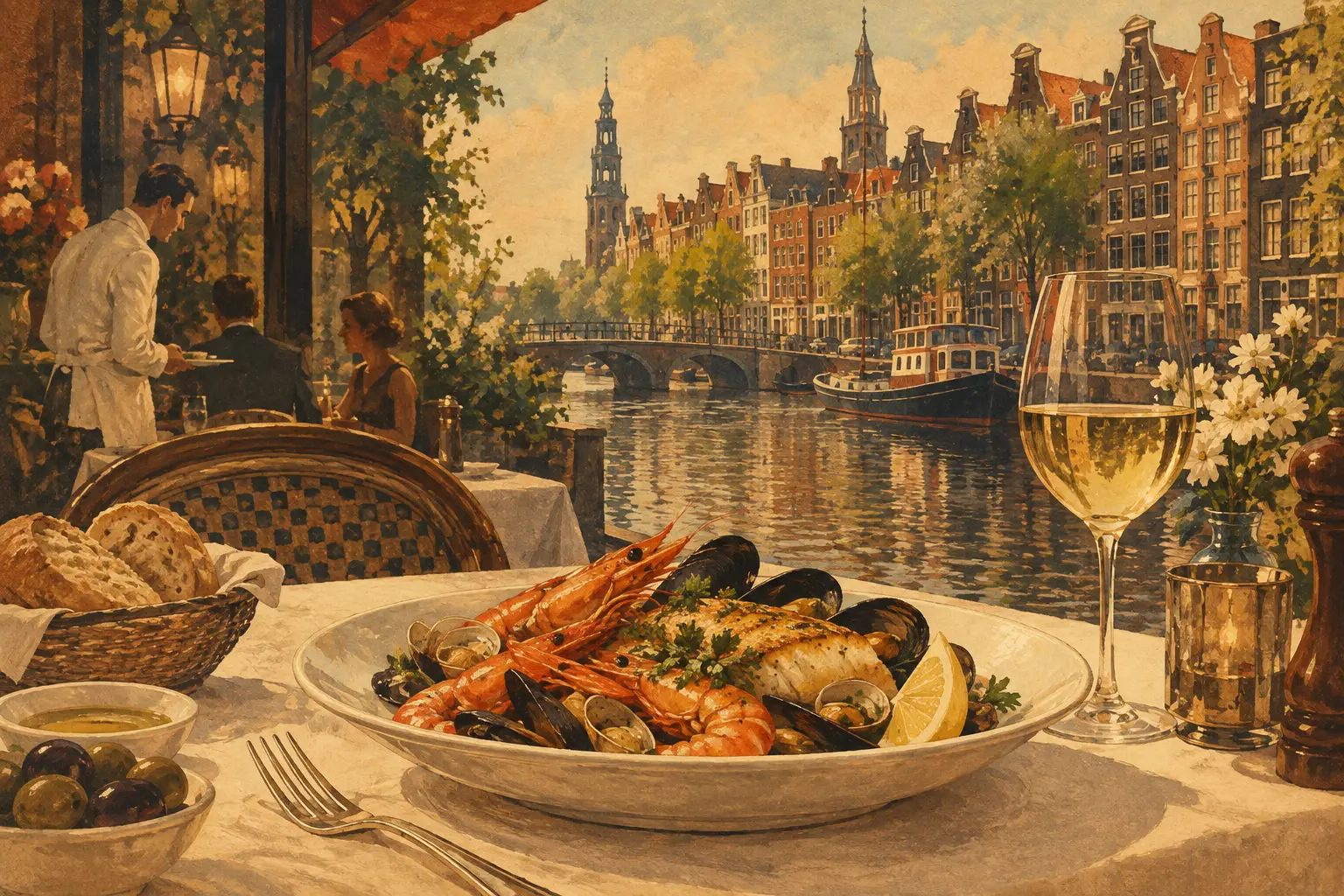
An Italian seafood restaurant Amsterdam guests remember is not defined by a single impressive fish dish. It is the feeling of sitting down to a dinner where the seafood is treated with restraint, the pasta has real character, the wine suits the table, and nobody feels rushed through the evening. In a city with many places to eat, that combination turns a meal into an occasion.
For visitors planning a memorable night in the city center, locals arranging a date night, or colleagues gathering after a busy day, Italian seafood offers a particularly generous kind of fine dining. It can be polished without feeling formal and celebratory without becoming stiff.
What makes Italian seafood worth seeking out
Italian cooking has a natural affinity for fish and shellfish because it begins with respect for the ingredient. The best preparations do not bury fresh seafood beneath heavy sauces or unnecessary decoration. They let a clean, seasonal flavor lead, then build depth with elements that belong on the plate: olive oil, tomato, citrus, garlic, herbs, white wine, or a gentle touch of chili.
That simplicity is more demanding than it looks. A delicate fish needs precise cooking. Shellfish needs freshness and timing. Risotto requires patience, and pasta needs to arrive with the right bite. When each part is handled well, a seafood dinner feels light enough for a long evening while still being deeply satisfying.
Italian menus also make seafood dining easy for mixed groups. One guest may begin with a bright seafood antipasto while another chooses a classic meat starter. At the table, fish can sit comfortably alongside a creamy risotto, a wood-fired pizza, or a plate of handmade-style pasta. This variety matters when the plan is to gather, not negotiate over one narrow menu.
Choosing an Italian seafood restaurant in Amsterdam
Amsterdam has restaurants for every kind of evening, from quick canal-side lunches to formal tasting menus. The right choice depends on the occasion, but a few details reveal whether a restaurant is likely to deliver a genuinely considered Italian meal.
Look for a focused menu, not endless options
A broad Italian menu can be welcoming, but it should still feel intentional. Seafood selections should make sense alongside the rest of the kitchen's cooking style, rather than appearing as an afterthought. Seasonal fish, carefully chosen shellfish, and dishes that use familiar Italian flavors with confidence are stronger signals than a page filled with generic descriptions.
It is also worth looking at how the menu balances comfort and refinement. A restaurant that can prepare an elegant fish course while also offering risotto, pizza, and pasta gives a group more freedom. This is especially useful for family celebrations and business dinners, where tastes often vary widely.
Let the setting match the reason for dinner
For an anniversary, a relaxed but polished room often matters as much as the food. For a business gathering, attentive service, a central location, and a menu that accommodates different preferences can make the evening run smoothly. For visitors, proximity to Amsterdam's central neighborhoods means less time coordinating transport and more time at the table.
Fine dining does not have to mean hushed voices and complicated rules. The most inviting Italian rooms have a sense of Italian togetherness: attentive service, warm conversation, and dishes meant to be shared or discussed. That atmosphere gives seafood its proper place, as part of a complete evening rather than a rushed main course.
Ask how groups are handled
Seafood dinners are often chosen for milestones: a birthday, a family reunion, a visiting client's meal, or a long-awaited gathering of friends. If you are booking for a larger party, confirm whether set menus or private dining arrangements are available. A well-planned group menu protects the quality of the experience, allowing the kitchen to serve everyone with care while still giving guests enough choice.
There is a trade-off. An a la carte dinner offers more individual freedom, while a set menu creates a more relaxed rhythm for a larger table. Neither is automatically better. For a small group with adventurous diners, sharing starters and choosing freely can be ideal. For a professional event or a celebration with many guests, a curated menu usually keeps the focus where it belongs: on the people around the table.
The pleasure of seafood beyond the main course
An Italian seafood dinner should unfold gradually. Start with antipasti that awaken the appetite rather than overwhelm it. Then consider whether the table calls for pasta, risotto, fish, or a combination. A seafood pasta can carry briny, concentrated flavor; a silky risotto offers a softer, more comforting contrast; grilled or roasted fish provides clarity and elegance.
The best choice depends on the season and your appetite. On a warmer evening, lighter preparations with citrus, herbs, and olive oil often feel right. On a cooler Amsterdam night, a warm risotto or pasta course can give the dinner a more leisurely, comforting pace. If the menu offers premium fish alongside rich dishes such as truffle ravioli, a group can create a particularly satisfying balance by ordering across the menu and sharing the experience.
Wine should support that balance, not compete with it. Crisp white wines are a natural partner for delicate fish and shellfish, while a fuller white may suit richer sauces or risotto. Those who prefer red wine do not need to sit out the meal - a lighter, fresh red can work beautifully with tomato-based seafood dishes or a table that also includes meat. A thoughtful server can help guide this decision without turning it into a lesson.
A city-center table for dinner worth lingering over
A central location changes the shape of the evening. You can meet after a day of museums, shopping, meetings, or canal walks, then settle in without treating dinner as a logistical challenge. Spuistraat, close to the pulse of central Amsterdam, makes an especially convenient starting point for a night that can be as spontaneous or as planned as you wish.
At Savini Ristorante Italiano, at Spuistraat 1-D, seafood is part of a wider expression of authentic Italian cuisine. The menu is designed for the full table: antipasti to begin, pasta and creamy risottos for comfort, wood-fired pizzas for familiar pleasure, and carefully prepared fish and meat selections for a more elevated main course. It is a fine Italian dining experience shaped by seasonal ingredients, contemporary presentation, and warm hospitality.
That range is valuable because great restaurant memories are rarely built around one order alone. They are made when one person finds the seafood dish they hoped for, another enjoys a favorite pasta, and the whole table has a reason to stay for another conversation. Guests who return often talk about specific plates - from pesto to truffle ravioli - but the lasting impression is the care behind the entire evening.
Plan the evening around the table
A seafood-focused Italian dinner is an excellent choice when you want food to feel special without requiring everyone to want the same thing. Make a reservation early for weekends, holiday periods, and larger celebrations. If you are organizing for colleagues or family, share the number of guests and the nature of the occasion when booking, so the restaurant can recommend the most comfortable arrangement.
Then arrive with enough time to enjoy the meal at its natural pace. Order with curiosity, ask what is seasonal, and leave room for a final course or coffee. The most rewarding dinner in Amsterdam is often not the one with the longest itinerary. It is the one where excellent seafood, Italian flavor, and good company give the night its own rhythm.