
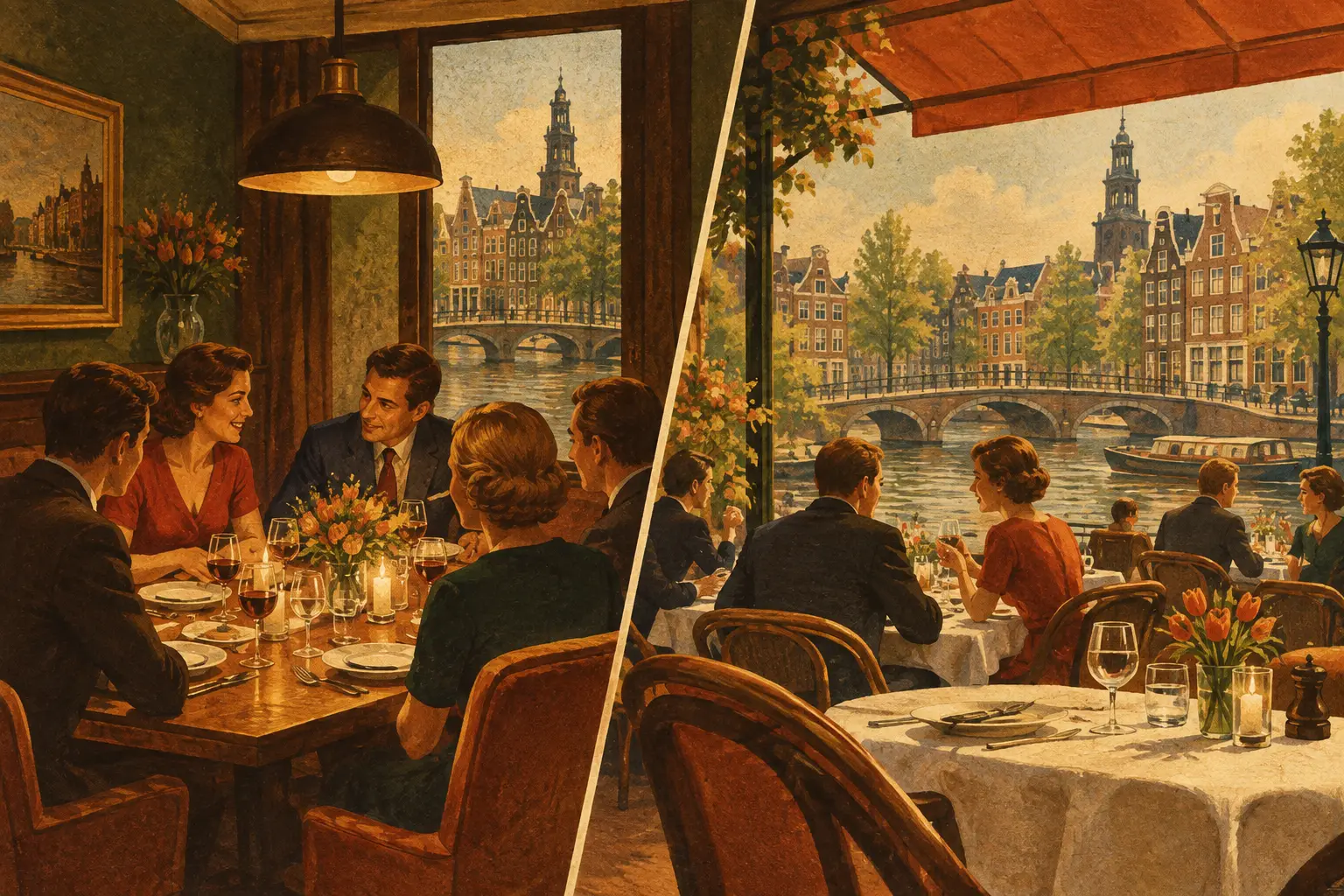
A birthday toast, a client dinner, or a long-awaited meal with family can feel entirely different depending on where everyone sits. The choice of private dining versus restaurant tables shapes more than the view: it affects the pace of the evening, the conversation, the menu, and how freely your group can celebrate. In central Amsterdam, where a dinner reservation often becomes part of a full night out, choosing the right setting is worth a moment of thought.
A restaurant table offers the energy of the dining room, attentive hospitality, and the flexibility to enjoy a relaxed meal for two or a small group. Private dining creates a more focused setting for larger gatherings and meaningful occasions. Neither is automatically better. The right choice comes down to the purpose of the meal and the kind of memory you would like to make around the table.
What Changes With Private Dining Versus Restaurant Tables?
The most noticeable difference is the atmosphere. At a restaurant table, you share in the rhythm of the room: glasses being poured, plates arriving from the kitchen, and the inviting hum of other guests enjoying authentic Italian cuisine. For many diners, that sense of occasion is exactly the appeal. It brings warmth to a date night, an easy catch-up with friends, or a spontaneous dinner after exploring Amsterdam.
Private dining gives your party more ownership of the evening. Conversation does not need to compete with a busy dining room, and a group can move naturally between a welcome toast, a presentation, and a leisurely meal. It is especially valuable when everyone at the table needs to hear one another, whether the gathering is professional, personal, or both.
The format also influences service. A standard table reservation allows each guest to order according to their own appetite and preferences. A private-dining arrangement often benefits from advance planning, including a set menu and a shared service rhythm that helps a larger party dine together without unnecessary pauses.
When a Restaurant Table Is the Better Choice
For dates and smaller celebrations
A restaurant table is often the most natural setting for two to six guests. It keeps the evening light, personal, and flexible. Couples can settle into a cozy dinner over a creamy risotto or truffle ravioli, while friends can share antipasti before choosing pasta, wood-fired pizza, seafood, or premium meat dishes according to their tastes.
This option also suits celebrations that feel special without requiring a formal program. An anniversary, a reunion with visiting friends, or a family meal can still have all the pleasure of polished service and carefully prepared food, while remaining easygoing. You arrive, choose what appeals, and let the evening unfold.
For guests with varied appetites
Italian dining is generous by nature, but different guests may want very different things. One person may be looking forward to a bright seafood dish, another may want pizza from the wood-fired oven, and another may prefer a vegetarian pasta. At a regular restaurant table, that freedom is simple.
This is particularly helpful when the group is small and not everyone knows each other well. Individual ordering removes pressure and gives each diner a sense of choice. A good menu should make that feel generous rather than complicated, with familiar Italian favorites prepared with care and contemporary character.
For an evening that stays spontaneous
Restaurant tables work well when timing, numbers, or plans may change. Perhaps you are meeting colleagues after a day in the city, or friends are deciding whether dinner will be a quick meal before a show or a longer night over wine and dessert. A standard reservation gives you room to make the experience your own.
The dining room setting can also be ideal for travelers. It offers a taste of Amsterdam's restaurant scene alongside the comfort of Italian hospitality, with the pleasant sense of being part of the city rather than apart from it.
When Private Dining Makes More Sense
For milestone occasions
Some events deserve a setting with fewer distractions. A significant birthday, engagement dinner, graduation, or multigenerational family celebration benefits from privacy because the people at the table become the focus. Guests can speak across the room, raise a toast without hesitation, and take their time with every course.
Private dining does not need to feel stiff. The best gatherings retain the relaxed generosity of an Italian meal: dishes arriving for everyone to enjoy, stories growing louder as the evening goes on, and hosts who can be present with their guests instead of managing details. The privacy simply gives the occasion more room to breathe.
For corporate dinners and client hosting
For business groups, privacy is often practical rather than ceremonial. It allows colleagues to discuss projects, welcome visiting partners, or thank a team without worrying about nearby tables overhearing. If a short speech, presentation, or company update is part of the plan, a dedicated space creates a more comfortable experience for everyone.
A set menu can be especially useful here. It keeps the evening moving at a considered pace and reduces the uncertainty of ordering for a large group. Guests still enjoy a full expression of the kitchen's style, while organizers have a clearer idea of timing and format before the event begins.
For groups that need a shared rhythm
Once a party becomes larger, individual orders can slow the meal and divide attention. Private dining lets hosts plan a progression that feels cohesive, from antipasti and first courses through the main course and dessert. That does not mean every meal must be identical. Dietary requirements and preferences should be discussed in advance so every guest feels included.
The value is coordination. Instead of spending the first part of dinner comparing menus and waiting for decisions, the group can begin enjoying each other's company sooner. For a celebration or professional event, that shared rhythm often makes the night feel more polished.
Compare the Cost, Flexibility, and Feeling
A restaurant table usually offers the greatest flexibility in both ordering and overall spend. Guests can select only what they want, and the host does not have to make many decisions in advance. It is a strong fit for a small party with varied budgets or an informal plan. The trade-off is that the dining room remains a shared environment, with its own natural pace and background energy.
Private dining often requires more commitment, particularly around guest count, menu selection, and reservation details. Depending on the group and date, there may be a minimum spend or a prearranged menu. That planning can feel like extra work at first, but it gives a host more control over the evening and helps the restaurant prepare thoughtful service for the party.
Think about the feeling you want guests to take home. If you want the lively pleasure of a fine Italian dining experience in a beautiful room, restaurant tables offer exactly that. If you want guests to remember the speeches, the uninterrupted conversations, and the sense that the night was created specifically for them, private dining may be the better fit.
How to Make the Right Reservation
Start with the purpose of the meal, then consider the guest count and the amount of structure you need. A group of four enjoying an unhurried dinner rarely needs the formality of a private space. A group of 12 celebrating a milestone or hosting clients may benefit from a planned menu and dedicated setting.
It helps to decide early whether you need speeches, special dietary accommodations, a fixed arrival time, or a clear end time. Share these details when making your reservation, along with the type of occasion and the number of guests. A restaurant can offer better guidance when it understands whether you are planning a relaxed family dinner or a carefully hosted event.
At Savini Ristorante Italiano, the pleasure of gathering is central to both options. A table in the dining room can be intimate and full of atmosphere, while a private arrangement can give larger parties the attention and space their occasion deserves. The goal is the same: memorable food, warm hospitality, and time well spent together.
Choose the setting that lets you be fully present at your own meal. When the table, menu, and pace suit the people you are bringing together, even a simple plate of pasta and a shared bottle of wine can become the part of the evening everyone talks about afterward.