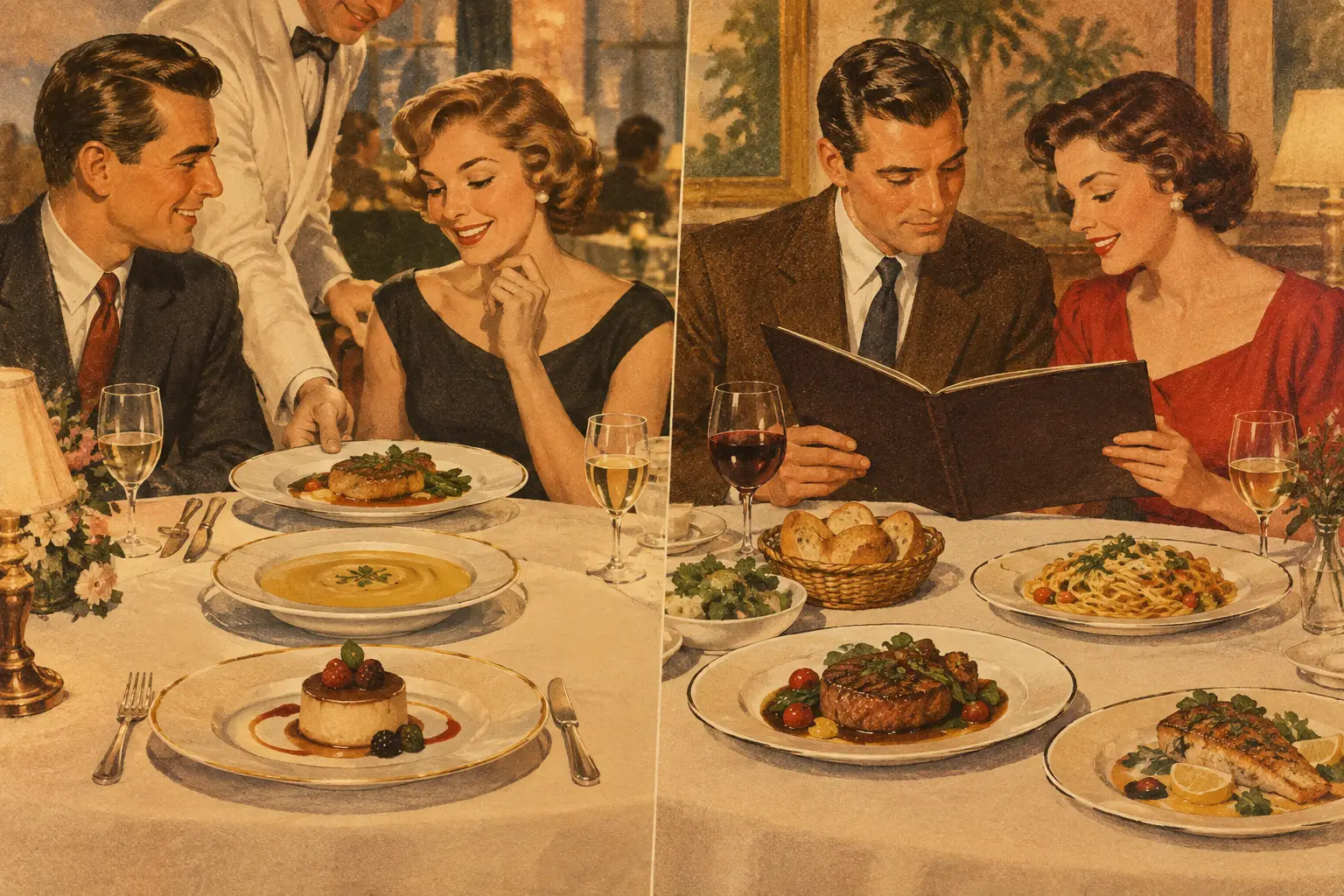
A memorable Italian dinner often begins with one small decision: set menu versus à la carte. One offers a carefully composed progression of flavors; the other lets every guest follow their own appetite, from a light antipasto to truffle ravioli, wood-fired pizza, or a premium fish course. Neither is automatically better. The right choice depends on the occasion, the number of guests, and how you want the evening to feel.
For a date night near Amsterdam's city center, ordering à la carte can make dinner feel personal and spontaneous. For a birthday, company dinner, or family gathering, a set menu can bring welcome ease to the table. The pleasure lies in choosing the format that leaves more room for conversation, great wine, and Italian togetherness.
What Is a Set Menu?
A set menu is a pre-selected sequence of courses offered at a fixed price per guest. It may begin with antipasti, continue with a pasta or risotto course, and finish with a main dish and dessert. At a fine Italian restaurant, it is not simply a shortened list of dishes. It is a menu designed with balance in mind: bright and savory opening flavors, satisfying textures, seasonal ingredients, and a natural pace from the first course to the last.
The strength of a set menu is intention. The kitchen has considered how each plate belongs beside the next, rather than asking guests to build that progression themselves. A creamy risotto may be followed by delicately prepared seafood, while a richer meat course may be balanced by a fresh, seasonal starter. When the menu is thoughtfully curated, the meal feels like one complete experience.
Set menus are particularly useful for groups. When several guests arrive at once, choosing each course individually can slow the beginning of the evening and create uncertainty around timing. A shared menu allows the table to settle in quickly. Service can be coordinated more smoothly, courses can arrive at a pleasing rhythm, and no one has to pause the conversation to compare every option.
That does not mean a set menu must feel restrictive. A well-planned one should still account for dietary requirements and provide clear alternatives where needed. The best approach is to share allergies, vegetarian preferences, and other needs when reserving, so the kitchen can prepare with proper care.
What Does À La Carte Mean?
À la carte means ordering each dish separately from the menu. Guests choose exactly what appeals to them, whether that is a crisp antipasto, a plate of pasta, a pizza from the wood-fired oven, or a full three-course dinner. Pricing is based on the dishes selected rather than one fixed menu price.
This format is ideal when appetites differ. One person may be in the mood for a generous main course, while another wants to share a few starters and linger over pasta. A guest with a favorite Italian classic can order it with confidence, and someone feeling curious can explore a dish they have not tried before.
À la carte also creates more freedom around pacing. You might begin with an aperitivo and a few antipasti, then decide whether to continue with pasta or finish with dessert. For a relaxed dinner with friends, that flexibility can be part of the enjoyment. There is no need to follow a prescribed path if the table would rather shape its own evening.
The trade-off is that more choice can take more time. For a large party, individual decisions can complicate service and make it harder for everyone to dine at the same pace. The final bill also varies more widely, which may matter when a host is planning a business meal or a celebration with a clear budget.
Set Menu Versus À La Carte: The Key Differences
The most practical difference between a set menu and à la carte dining is choice. À la carte gives each guest maximum control. A set menu narrows the decisions in exchange for a meal that has been designed as a whole.
Value works differently, too. A set menu provides price clarity before the meal begins. This is helpful for hosts arranging a group dinner, especially when wine, service timing, and guest experience all need to be considered. It can also offer a strong expression of the kitchen's culinary style, bringing several courses together at a predictable cost.
À la carte value is more personal. A guest who wants only a pasta and dessert may prefer paying for exactly that. Another guest may choose a more elaborate selection of antipasti, a premium main course, and a bottle of wine to share. It depends less on finding the lowest price and more on matching the meal to the appetite and occasion.
There is also a difference in discovery. A set menu is an invitation to trust the chef's composition and experience a range of flavors that work together. À la carte is an invitation to return to favorites or follow a particular craving. Both can deliver culinary excellence, but they do so in different ways.
When a Set Menu Is the Better Choice
A set menu is often the natural choice when dinner has a purpose beyond simply choosing a restaurant. Think milestone birthdays, engagement celebrations, professional gatherings, holiday dinners, and family occasions where the host wants guests to feel looked after from the moment they arrive.
For corporate groups, a pre-arranged menu helps the evening stay gracious rather than logistical. Guests can connect over the table instead of negotiating orders, and the restaurant can deliver each course with polished timing. This is especially valuable when there is a theater reservation, a planned speech, or a schedule to respect afterward.
It also suits guests who want to taste the restaurant's point of view. Instead of deciding between every tempting option, they can enjoy a progression built around authentic Italian cuisine, seasonal ingredients, and complementary flavors. The choice is made once, then the evening can unfold.
At Savini Ristorante Italiano, this style of dining lends itself beautifully to private gatherings and group celebrations, where warm hospitality and a composed menu allow everyone to focus on being together.
When À La Carte Makes More Sense
Choose à la carte when individuality matters most. It is especially fitting for couples, smaller groups, and returning guests who already know what they love. Perhaps one guest has been thinking about pesto pasta all day, while another wants the rich depth of truffle ravioli. There is no reason to compromise when the pleasure of the meal is in choosing your own plate.
À la carte is also a good fit for a less structured evening. You may be stopping in after exploring Amsterdam, meeting friends for a late dinner, or simply looking for a cozy table and a glass of Italian wine. Some nights call for a full dining experience; others call for pizza from the oven, a favorite pasta, and no further planning.
For guests with highly specific dietary preferences, individual ordering can offer additional reassurance. It makes it easier to select dishes according to appetite and needs while speaking directly with the service team about ingredients and preparation.
How to Choose for Your Occasion
Start with the number of people at the table. For two to four guests, à la carte usually offers easy flexibility without affecting the flow of service. For larger parties, a set menu often creates a more relaxed and coordinated experience, particularly if the group includes guests who do not know one another well.
Then consider the mood. If the goal is discovery, celebration, and a dinner with a natural beginning, middle, and finish, a set menu has real appeal. If the goal is freedom, familiar favorites, or a meal that can be as light or generous as the moment requires, à la carte is likely the better fit.
Finally, think about the host. A fixed menu removes many small decisions and gives everyone a clear expectation. That calm can be worth as much as the menu itself. On the other hand, a host who knows their guests enjoy choosing independently may create a warmer evening by letting the table order freely.
The most inviting Italian meals are not defined by how many choices appear on the page. They are defined by the pleasure of the table: a dish chosen with anticipation, a course shared at the right moment, and enough time to savor the company across from you.