
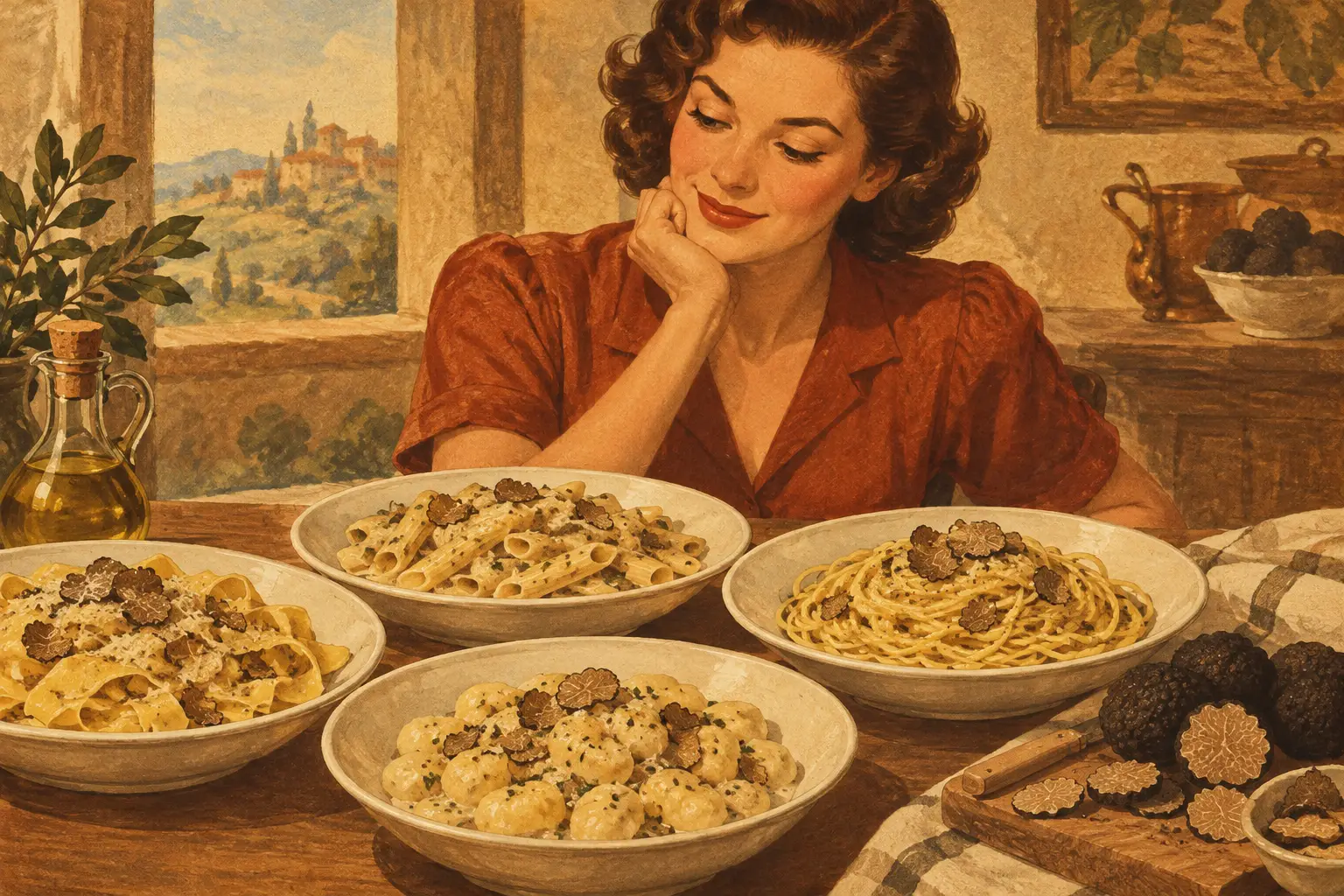
Truffle sauce has a way of changing the pace of a meal. Its aroma arrives first - earthy, warm, and unmistakably luxurious - so the pasta beneath it must know when to support and when to stay quietly out of the way. The question of which pasta suits truffle sauce is less about one rigid Italian rule than about texture, shape, and the style of sauce on the plate.
For most truffle pasta dishes, fresh egg pasta is the most elegant choice. Tagliatelle, fettuccine, pappardelle, and filled pasta all offer the tender bite and broad surface that a truffle-infused butter, cream, or cheese sauce needs. Yet a beautiful plate is not simply about choosing the widest noodle. A delicate white truffle preparation asks for restraint, while a richer mushroom and black truffle sauce can welcome a more substantial shape.
Which Pasta Suits Truffle Sauce Best?
If choosing one pasta for a classic truffle sauce, tagliatelle is the dependable answer. These long, ribbon-like noodles are wide enough to catch a glossy coating of butter or cream, but not so wide that they overwhelm the truffle. Their fine, tender texture also feels natural with the understated luxury of the ingredient.
Tagliatelle is especially suited to sauces built with butter, Parmigiano Reggiano, a little pasta water, and freshly shaved truffle. Each strand carries enough sauce to deliver aroma in every forkful without turning the dish heavy. It is the sort of pasta that lets a prized truffle remain the center of attention.
Fettuccine works in much the same way, with a slightly broader, heartier character. It is a lovely option for a creamy truffle sauce, particularly when the sauce includes mushrooms or a touch of mascarpone. The trade-off is richness: the more dairy and cheese a sauce contains, the more carefully it needs to be balanced with pasta water and seasoning. Truffle should perfume the dish, not disappear beneath a blanket of cream.
Pappardelle is best when the sauce has more body. Its wide ribbons stand up well to a ragù-style mushroom sauce enriched with black truffle, or to a sauce served alongside roasted poultry or veal. For a simple white truffle butter, however, pappardelle can be a little too assertive. The pasta's generous surface may carry more sauce than the truffle needs.
Fresh Egg Pasta Brings the Best Texture
Truffle and fresh egg pasta belong together for a reason. Egg yolks bring a subtle richness and golden color, while the softer structure of fresh pasta absorbs and holds a silky sauce beautifully. It creates the kind of harmonious bite that feels refined without becoming fussy.
That does not mean dried pasta is wrong. A high-quality dried pasta can be excellent with truffle sauce, particularly when its texture is bronze-cut and its shape has ridges or folds. The key is to select a form that takes on sauce rather than letting it slide away.
Tonnarelli, a square-cut spaghetti common in central Italian cooking, is a strong choice for a lighter truffle cheese sauce. Its firm, springy bite gives contrast to melted butter and cheese, making it ideal for diners who prefer a little more structure in their pasta. Spaghetti can also work, although its thinner strands are more convincing with a simple truffle oil or truffle butter finish than with a thick cream sauce.
Filled Pasta Makes Truffle Sauce Feel Celebratory
For a more indulgent occasion, ravioli is one of the finest companions for truffle sauce. The filling creates a second layer of flavor, which is why it deserves thoughtful pairing. Ricotta ravioli with brown butter and black truffle is gentle, aromatic, and deeply comforting. Potato-filled ravioli offers a soft, earthy canvas that echoes the truffle's woodland notes.
Truffle ravioli is another natural choice, but it requires a light hand in the sauce. When truffle is already present in the filling, adding a dense truffle cream can make the plate feel one-dimensional. A gloss of butter, a spoonful of pasta water, and a final shaving of fresh truffle often provide more elegance than an elaborate sauce.
At Savini Ristorante Italiano, a truffle ravioli dish fits the spirit of Italian dining at its most inviting: carefully prepared, richly flavored, and made for lingering over with good company. It is a reminder that truffle pasta need not be reserved only for formal occasions. It also belongs at a cozy dinner where the pleasure comes from sharing something memorable.
Pasta Shapes That Need a Little More Care
Some pasta shapes are less natural with truffle sauce, though the final result always depends on preparation. Penne and rigatoni can be satisfying with a mushroom-heavy truffle cream, since their hollow centers and ridges capture thicker sauces. They are less successful with shaved fresh truffle and butter alone, where the dish benefits from the graceful, continuous surface of long pasta.
Short, twisting shapes such as fusilli are useful when truffle is one note among several, perhaps with mushrooms, peas, or sausage. But if the purpose is to highlight the truffle itself, their busy shape can distract from the dish's quiet simplicity.
Very small pasta, including orzo and ditalini, is rarely the first choice for truffle sauce. These shapes can work in a brothy preparation or a risotto-like dish, but they do not offer the same satisfying ribbon or filled-pasta experience. A truffle sauce is aromatic and often delicate; it benefits from a pasta shape that creates an unhurried, generous bite.
Match the Pasta to the Type of Truffle Sauce
The right choice becomes clearer once the sauce is defined. A butter-based sauce with fresh white truffle calls for tagliatelle, fettuccine, or delicate ravioli. These pastas carry just enough fat to release the truffle's perfume while remaining light on the palate.
A cream-based sauce is more forgiving and can pair beautifully with fettuccine, tonnarelli, or even rigatoni. Add mushrooms and black truffle, and the dish has enough depth for pappardelle or a substantial filled pasta. The deeper flavor of black truffle holds its own against roasted, savory ingredients, while white truffle is more fragile and should be treated with restraint.
Truffle oil deserves a separate mention. Its intensity varies dramatically, and a little goes a long way. When using it, choose a simple pasta such as spaghetti or tagliolini, then finish with good butter, cheese, and pasta water. The goal is fragrance, not saturation.
The Details That Keep Truffle Pasta Elegant
Whatever pasta shape you choose, the cooking method makes the final dish. Cook the pasta until just al dente, then finish it in the pan with the sauce and a splash of starchy pasta water. This creates a glossy emulsion that clings to the pasta rather than pooling at the bottom of the plate.
Avoid overpowering additions. Garlic, strong herbs, chili, and excessive lemon can easily compete with truffle. A measured amount of finely grated Parmigiano Reggiano or Pecorino may add depth, but too much cheese can mute the aroma. Salt should be confident but careful, especially when the sauce includes cured butter or aged cheese.
Fresh truffle should be shaved at the last moment, ideally over warm pasta just before it reaches the table. Heat helps release its fragrance, but prolonged cooking dulls it. If using truffle butter or preserved truffle products, fold them in off the heat whenever possible to preserve their character.
The finest answer is often the simplest one: choose tagliatelle for a classic truffle sauce, ravioli when the meal calls for something more celebratory, and pappardelle when the sauce is rich enough to meet it. Then serve it promptly, while the aroma is still rising from the plate and the table is ready to enjoy it together.