
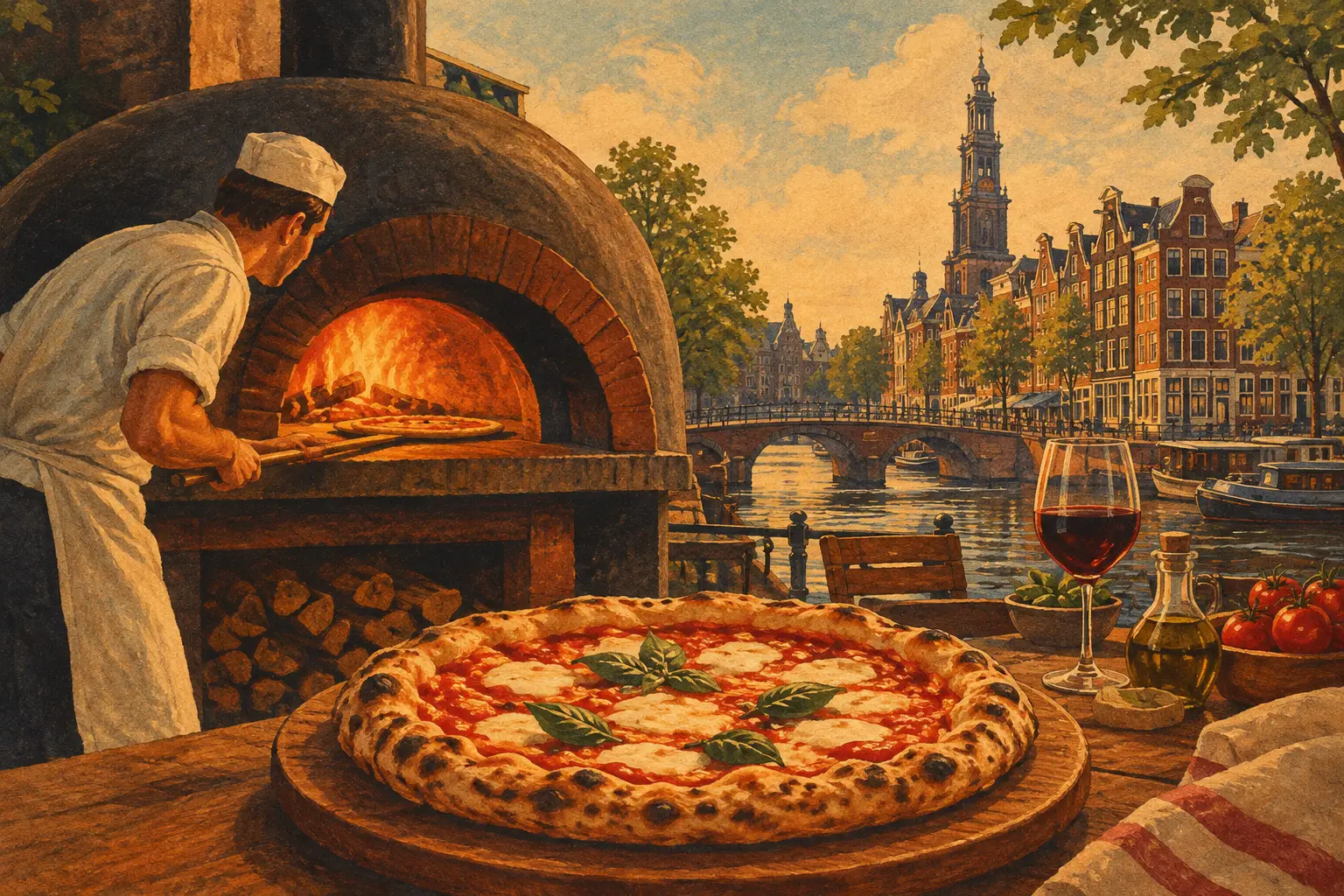
A search for wood fired pizza central Amsterdam often begins with a simple craving: a crisp, blistered crust, fragrant tomato, melting cheese, and the unmistakable warmth of a pizza fresh from the oven. Yet in the city center, where dining choices are everywhere, the better question is not simply where to find pizza. It is where to enjoy it as part of a memorable Italian dinner.
Wood-fired pizza has a particular place at the table. It can be a relaxed meal after a day along the canals, the easy centerpiece of a dinner with friends, or the first course of a longer evening with antipasti, pasta, wine, and dessert. When it is made with care, it belongs just as naturally in a polished dining room as it does at a casual neighborhood table.
What Makes Wood Fired Pizza Worth Seeking Out
A wood-fired oven does more than cook a pizza quickly. Its intense heat gives the dough character: a crisp outer edge, a tender interior, and small dark blisters that bring a gentle smokiness without overwhelming the ingredients. The result should feel light enough to enjoy from the first slice to the last.
That heat also rewards restraint. A pizza loaded with too many wet toppings can lose its balance before it reaches the table. The best versions let a few carefully chosen elements do their work: ripe tomato, creamy mozzarella, peppery arugula, savory cured meat, seasonal vegetables, or a well-judged finish of olive oil.
This is why wood-fired pizza is not just about the oven. Dough fermentation, ingredient quality, timing, and the pizzaiolo's attention all matter. A beautiful crust cannot compensate for flat sauce or cheese that has been handled without care. Equally, excellent ingredients need the right heat to become more than the sum of their parts.
Wood Fired Pizza in Central Amsterdam Means More Than Convenience
Central Amsterdam is ideal for an Italian dinner because it brings together visitors, residents, business travelers, and people making an evening of it. A restaurant near the heart of the city should make a meal feel easy to plan without making it feel rushed. That balance is especially valuable for a date night, a family celebration, or a group gathering after work.
For travelers, pizza can be a welcome and recognizable choice after a full day of museums, shopping, and canal walks. For Amsterdam locals, the appeal may be different: a dependable place where familiar Italian flavors are prepared with enough care to make an ordinary dinner feel considered. Both audiences deserve more than a quick stop for food.
The setting matters. A wood-fired pizza is at its best when served immediately, while the crust is still lively and the cheese is at its most inviting. Sitting down in a warm dining room, sharing a bottle of wine, and allowing the meal to unfold at its own pace turns a popular dish into an occasion.
How to Choose a Pizza Restaurant for the Evening You Want
Not every pizza dinner calls for the same atmosphere. If the plan is informal and spontaneous, a focused pizza meal may be exactly right. If the evening includes guests with different appetites, a wider Italian menu offers more freedom. One person can order pizza while another chooses creamy risotto, fresh pasta, fish, or a premium meat dish, without anyone having to compromise.
This flexibility is particularly helpful for groups. Pizza is naturally shareable, but a table is more welcoming when guests can begin with antipasti and choose the main course that suits them. A thoughtful restaurant can accommodate the pizza enthusiast, the pasta lover, and the guest looking for a lighter seafood dish in one cohesive meal.
There is also a difference between eating pizza and being looked after. For celebrations and professional dinners, attentive service, comfortable pacing, and a setting that supports conversation are not extras. They are part of what makes people want to gather around the table.
Look Closely at the Crust
A well-made wood-fired crust should have contrast. Its rim may be airy and gently charred, while the base remains structured enough to hold the toppings. It should not be hard, dry, or so soft that each slice folds under its own weight.
Char is not a flaw when it is controlled. Those dark spots are a signature of high heat and can add a subtle toasted note. But a bitter, burnt base suggests the pizza stayed too long in the oven or was not watched closely enough. The difference is small, but it is easy to taste.
Let the Ingredients Tell You Something
Authentic Italian cuisine does not need to be overly complicated to feel special. A vibrant tomato sauce, aromatic basil, quality mozzarella, and a good olive oil can say plenty. Richer choices can be equally satisfying when their ingredients remain distinct rather than becoming heavy.
Seasonality is another welcome sign. The most appealing menu does not need endless variations. It needs combinations that make sense, prepared with ingredients at their best. That same approach should carry across the menu, from antipasti to pasta and dessert.
Pairing Pizza With the Rest of an Italian Table
Pizza is often treated as a meal of its own, and sometimes that is precisely the point. But central Amsterdam dinners can call for a more generous rhythm. Beginning with antipasti gives the table a chance to settle in. Sharing a few plates creates conversation before the pizzas arrive hot from the oven.
For a lighter pizza with tomato, mozzarella, or vegetables, a bright Italian white or a crisp sparkling option can complement the freshness. A pizza with richer cheeses, mushrooms, truffle, or cured meats often welcomes a medium-bodied red. The goal is not to follow rules for their own sake. It is to choose a drink that leaves room for the food.
A full Italian menu also means that pizza does not have to carry the evening alone. A plate of truffle ravioli may suit a guest looking for something more indulgent, while risotto offers its own comforting richness. This variety makes the restaurant a stronger choice when diners are arriving with different tastes and expectations.
At Savini Ristorante Italiano on Spuistraat, wood-fired pizzas sit naturally alongside contemporary interpretations of Italian classics, creating a fine Italian dining experience that still feels warm and welcoming. It is a useful reminder that culinary excellence and Italian togetherness are not competing ideas. They belong at the same table.
When Pizza Is the Right Choice for a Group
Pizza works beautifully for groups because it invites sharing, but planning still matters. A small dinner with friends may benefit from ordering a few different pizzas for the table, followed by dessert. For a larger celebration or corporate gathering, a set menu can bring structure while preserving choice and a sense of generosity.
Consider the energy of the occasion. A birthday dinner may call for a longer meal with several courses and a celebratory finish. A business gathering needs enough menu variety to suit varied preferences, as well as service that keeps the evening moving comfortably. Families may value familiar dishes alongside elevated options for more adventurous diners.
The common thread is hospitality. Guests remember the pizza, but they also remember whether the table felt relaxed, whether everyone found something appealing, and whether the meal gave them a reason to stay a little longer.
A Better Way to Plan Your Pizza Dinner
For the best wood-fired pizza experience, reserve enough time to enjoy it fresh from the oven rather than treating dinner as a final task on a busy itinerary. If you are dining before a show, meeting friends after work, or organizing a special occasion, choose a time that lets the meal breathe.
Order with the table in mind. Start modestly, choose pizzas that offer contrast, and leave space for the dishes that make Italian dining feel complete. A crisp appetizer, a favorite pasta, or a shared dessert can turn a craving into an evening worth repeating.
The finest pizza dinners are rarely only about the slice. They are about the first aroma from the oven, the conversation that carries between courses, and the pleasure of gathering around food made to be shared.